Wednesday, June 15, 2011

Mary Quant - Chelsea Girl

Originally published on the Coletterie blog.

Mary Quant (1939-     ) Welsh

Model Jean Shrimpton in Quant.

In 1955, Mary Quant  and her husband Alexander Plunket-Greene, opened the boutique Bazaar in the King’s Road when she was in her early twenties. She began selling clothing, eventually creating her own handmade fashions. Ten years later, her miniskirts and pop music-accompanied  fashion shows would bring her style of fashion to the young people of “Swinging London.” As she said, “the young were tired of wearing essentially the same thing as their mothers.”

Natural Hessian, acrylic pinafore, 1965.

She focused on designing for teenagers and young adults, offering them inexpensive and youthful garments. She was a leading figure in the 1950s and 60s for helping create the Youthquake look of low-slung tight trousers, mock-turtlenecks, opaque colored tights, flat shoes or short boots, and most importantly, the mini-skirt. These looks were different from the Teddy Boy or Mod looks popular before and around that time.

Fashions photographed by John French, 1962.

She also dressed some of the top models of her day; Twiggy, Jean “the Shrimp” Shrimpton and Verushka in brightly colored opaque or patterned stockings, slim pantsuits, hot pants, and low-slung plastic hip belts. She embraced non-traditional materials such as PVC and plastic for use in clothing and accessories. One of her  innovations were white plastic collars that were detachable from her dresses and sweaters in order to create new looks from the same pieces.

Wool "Peachy" dress, 1960.

In 1962, her lower-priced mass produced line, Ginger Group, was successfully exported to America and her black daisy logo could be found on all her products from clothing, accessories, cosmetics, textiles, and even housewares. At one point she was contracted by retailer J.C. Penney to produce four collections a year in America.

Mustard yellow wool pinafore, 1961.

She created a convenient "paint-box" like makeup set that held all the colors in a single palette. Clothing-wise, She created a hand-knitted collection named Viva-Viva in 1967 that was constructed of synthetic fibers. She also had a separate lingerie line called Youthlines that was one of the first to involve Lycra in the production of underwear.

Butterick 3287

Butterick 6243.

Home Sewing Connection: Quant licensed some designs for Butterick Patterns as part of their Young Designer group in the 1960s.

Yellow molded plastic boots, 1965.

Her style, innovations, and lasting influence on fashion:

PVC "Christopher Robin" raincoat, 1963.

  • First designer known to use plastic and PVC for coats and footwear, especially for her “Wet Collection” of 1963.
  • Quant was awarded an Order of the British Empire (OBE) in 1966 for her outstanding contribution to the fashion industry.
  • Vidal Sassoon created some of his first short geometric haircuts on her and her models.
  • She also designed airline hostess uniforms for Court Line Aviation in 1972.
  • Wrote an early autobiography Quant by Quant in 1966.
Images: Metropolitian Museum of Art collection, McCall Pattern company.

Sources: The Great Fashion Designers (2009) Roger Tredre and Brenda Polan; The World’s Most Influential Fashion Designers (2010) Noel Palomo-Lovinski; Women of Fashion (1991) Valerie Steele; Swinging Sixties (2006) Christopher Breward; Quant by Quant (1966) Mary Quant.

Thursday, June 09, 2011

In The Details: Vogue 9785 Scares Me!


The concept is very clever but is anyone else as frightened by these illustrations as I am?!

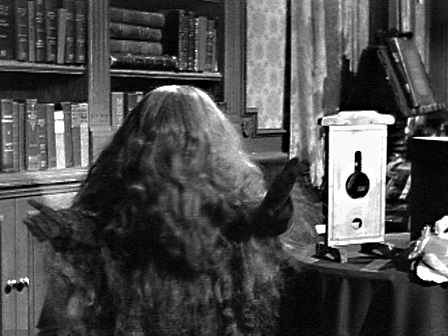
I think what creeps me out the most is that second skirt there and how the hand from the cape model seems to belong to it, like a little torso-missing person or a tiny women hiding under the skirt like a female Cousin It. Ewww.

Note: Oops, I forgot to explain the above pattern. It is for a garment meant to be worn as a cape and as a skirt. Can you believe it! Like I said, the concept is clever and inventive but it would only work if you use the right fabric.

Image: Pattern available at Out of the Ashes Collectibles.

Wednesday, June 08, 2011

Oleg Cassini - Couturier To Camelot

Originally published on the Coletterie blog.

Oleg Cassini (1913-2006) American

Inaugural Gala, 1961.

Oleg Cassini was born a Count in the Russian nobility. In his earlier years, he worked as a sketch artist for the House of Patou in Paris. After his arrival in America, he worked under Edith Head at Paramount and later left the company for Twentieth Century Fox in 1942. Comfortable in Hollywood, he was married to actress Gene Tierney for many years and after their divorce, he was engaged to Grace Kelly before she married Prince Rainier of Monaco.

In 1960, Oleg Cassini was considered a second-string American designer when he was tapped by Jackie Kennedy to design her European influenced wardrobe. She had been chastised for wearing expensive European designers so an American designer was required. Cassini became the first official White House fashion designer. The clothes were designed, in collaboration with the First Lady, replicating European designs using the same fabrics being used by the likes of Balenciaga and Givenchy.

Alaskine silk dress worn at the Vatican, 1962.

In the past, Cassini’s designs for other clients tended to be skin-tight, slinky dresses with daring necklines; however, Jackie required clothes that shielded her body’s curves from view. She preferred fabrics with body and substance to thin clingy materials. Cassini used fabrics such as linen, shantung, heavy satins, and wools that were then made up in silhouettes that would stand away from her body. He designed what she wanted, simple and young clothes that were still suitably covered up for the occasion. The clothes tended to be architecturally clean, with A-line or bell shaped skirts, and made up in sumptuous fabrics. They sometimes projected an almost monastic simplicity, as epitomized in his design for her Inaugural Gala gown.

Swiss double satin Inaugural Gala gown, 1960.


With her patronage, Cassini was able to expand his staff and business; in fact, he created a separate staff responsible only for the First Lady’s wardrobe. In designing a complete wardrobe for one woman, Cassini was able to develop a specific look for Jackie. The dresses were mostly sleeveless sheaths, though some dresses were A-line or had slightly gathered fuller skirts. Each dress had its own matching jacket or coat along with coordinating hats, gloves, and shoes. An often used signature was a fabric bow or tie detail either near or at the waist of her dresses, both in daytime and evening.

Televised White House tour "suit" 1962.


Her suits were boxy but had softly shaped shoulders, three-quarter length sleeves, and were frequently accented with over-sized fabric-covered buttons.  Many jackets were collar-less or banded; however, if a jacket did have a collar it was usually so distinctive that it was the only decorative element on the ensemble.

Ensemble sketch from One Thousand Days, 1995.

After this period of designing for Jacqueline Kennedy was over, clothes created by Oleg Cassini were more popular than ever. His new-found celebrity and frequent appearances on talk shows such as The Tonight Show, Phil Donahue, and Merv Griffin were in part responsible for raising the status and image of the American designer to the domestic and international public.

Wool melton coat, 1960.

Note: A fabulous slide show of the First Lady’s clothing can be viewed at the  John F. Kennedy Presidential Library and Museum website.

Prominent Designer pattern, A661.

Home Sewing connection: Cassini lent his name to some Prominent Designer mail order patterns.

From One Thousand Days of Magic, 1995.


His style, innovations, and influence on fashion:
  • Though conceived originally by Balenciaga, Jackie’s dependence on the pillbox hat design kept Cassini, Halston, and other American designers creating them for years.
Silk ziberline dress worn in India, 1962.
  • He became well known for the icy pastels shades he put the First Lady in as well as the bright yellow, oranges and hot pinks that were used in the First Lady’s wardrobe, especially in the brightly colored wardrobe worn during her 1962 solo tour of India.
  • Cassini created about 100 outfits for the First Lady during that first year and around 300 during her entire time in the White House.
  • He was one of the first designers to franchise and license his name on a variety of products, not only on clothing related items.
  • In menswear, he popularized the “Nehru” jacket along with strongly colored button-down shirts in shades of dark blue, orange, and red in the mid-1960s.
  • After writing his autobiography, In My Own Fashion in 1987, Cassini published a fabulous 217-page book on his time with Jackie Kennedy called One Thousand Days of Magic: Dressing Jacqueline Kennedy for the White House in 1995. Cassini examines sketches and pictures of 102 dresses worn during the three years in the White House and it is highly recommended.
From One Thousand Days of Magic, 1995.
  • His designs were showcased in a 2001 Metropolitan Museum of Art exhibition entitled “Jacqueline Kennedy: The White House Years.”
Images: John F. Kennedy Presidential Library and Museum

Sources: The Way She Looks Tonight (1996) Marian Fowler; In My Own Fashion (1987) Oleg Cassini; A Thousand Day of Magic: Dressing Jacqueline Kennedy for the White House (1995) Oleg Cassini.

Tuesday, June 07, 2011

What I've Been Reading

Updated: now with mini-reviews

Here are the latest fashion books that I have been reading and thoroughly enjoying!


Pierre Cardin: Fifty Years of Fashion and Design by Elisabeth Längle

This book was very interesting because it has many photographs of his clothes over the years where you see his evolution, real innovation, and sometimes magical flights of fancy that most people would never wear out in public. Especially some of the 1970s menswear!


Claire McCardell: Redefining Modernism by Kohle Yohannan

A great book about this creative woman who advocated clothes that woman could be comfortable in. Her clothes had elegant designs and fine fabrics, but there was no sense of one-upmanship in her clothes. Practical and pretty is a good description, except for the shocking and seductive jersey bathing suits she designed.


A Thousand Days of Magic by Oleg Cassini

I love this book! Though I have to admit the sketches were sometimes more appealing than the finished garments, but I believe that could be attributed to the fact that Jackie Kennedy stipulated to Mr. Cassini that she did not want her clothes to be too body hugging. So, unlike the sketches, the bodices' of the completed garments are not as closely fitted, the waists are not cinched enough, and the fabrics are sometimes stiff looking. However, they are all lovely and this book presents and discusses 108 outfits during her three years in the White House.

Emma Peel!
Swinging Sixties by Christopher Breward, David Gilbert and Jenny Lister

My least favorite of the books, but only because it was not as focused on fashion as it was on the entire sixties experience in youth culture, underground paper media, and music. But a fine book overall.

Wednesday, June 01, 2011

Andre Courreges - Master Of Mod

Originally published on the Coletterie blog.

AndrĂ© Courrèges (1923-    ) French

Photo by Willy Rizzo, 1966.

AndrĂ© Courrèges was trained as a civil engineer and was a pilot in the French Air Force.  He  studied fashion at the Chambre Syndicale school and eventually was trained by the great Balenciaga. His early designs were conservative like other fashion houses of the day. However, when he launched his ‘space-age’ Couture Future collection for spring 1965, his designs had drastically changed and were seen as unconventional.  At the showing, his studio, the furniture, and models were all in white and the looks he showed included above-the-knee short dresses, short boots, and accessories such as large orb-like goggles, all uncluttered by extraneous detail.

Wool gaberdine coat, 1967.

This collection was a sensation to the fashion critics and the press. However, since couture purchases were made by older women, the designs were not ideal for a traditional fashion house. They were conceived for young, fit women with an open mind towards fashion.

Ensemble, 1960s.

The numerous retailers who made copies of his work had to tone down his ideas for the general public. Shortly after he showed his futuristic collection in 1964, the market was flooded with plastic jackets, short A-line dresses, helmet-like hats, vinyl or leather mid-calf, flat-heeled “go-go” boots, and bug-eyed goggles.

Suit, 1965.

Courrèges built his dresses from geometric shapes such as squares, trapezoids, and triangles rather than designing them with flowing lines. He frequently used polyvinyl chloride (PVC) in his designs, from footwear to eye-wear. When he used color it was usually primary colors of red, yellow, blue, or neutrals such as navy, brown, or black, all on a field of white. The color was used as trim, a finishing detail, or a bold statement usually highlighting the geometric shapes. In later years, his choice of colors would move to acid colors and even glow-in-the-dark fashions. In 1985, he retired and sold his business and instead focused on painting and sculpture.

Courreges-inspired McCall's pattern ad.

Home Sewing Connection: Though Courrèges did not design them, McCall’s in collaboration with Seventeen magazine created patterns inspired by his designs, McCall’s  7903, McCall’s 7923, and McCall’s 7884.

Audrey Hepburn.

Hollywood Connection: In 1967‘s Two For The Road, his clothes appeared on Audrey Hepburn, along with designs from other modern designers of the day such as; John Bates, Paco Rabanne, Mary Quant, and Pucci. His accessories (above) were also featured in her film, How to Steal a Million in 1966.

Wool jumper, 1965.

His style, innovations, and influence on fashion:
    Red wool dress, 1960.
  • Both he and Mary Quant have been branded as being the first designer to show miniskirts as fashion. Quant insists that she only marketed the style that she had seen on the streets, whereas Courrèges took them to the couture level.
Leather mid-calf high boot, 1965.
  • Couture Future was his deluxe ready-to-wear line and two years later he created his haute couture line, Prototypes. In 1971, he created Hyperbole as sportswear for his younger clients.

2006 Zooop battery -charged car.
  • Courrèges and his wife Coqueline, both studied under Balenciaga. Coqueline has gone on to design La Bulle (the bubble), the EXE, and most recently the 2006 Zooop; all electric powered vehicles and well known in France.

Images: Victoria and Albert Museum,  London; McCall’s ad from nurse_marbles on Flickr.

Sources:The World’s Most Influential Fashion Designers (2010) Noel Palomo-Lovinski; “AndrĂ© Courrèges or the Futurism in Fashion,” by Lubomir Stoykov, (2008) Fashion Lifestyle Magazine, #12; Fashion: The Century of the Designer, 1900-1999 (1999) Charlotte Seeling; Swinging Sixties (2006) Christopher Breward.